From supplier to sale, keep every unit in balance.
Connect sourcing, procurement, inbound deliveries, storage and sales bookings in one live inventory system. CholaStock agents reserve stock for confirmed orders, compare suppliers, prepare purchase orders, rebalance locations and reorder at the right time — before shortages interrupt sales or excess stock ties up cash.
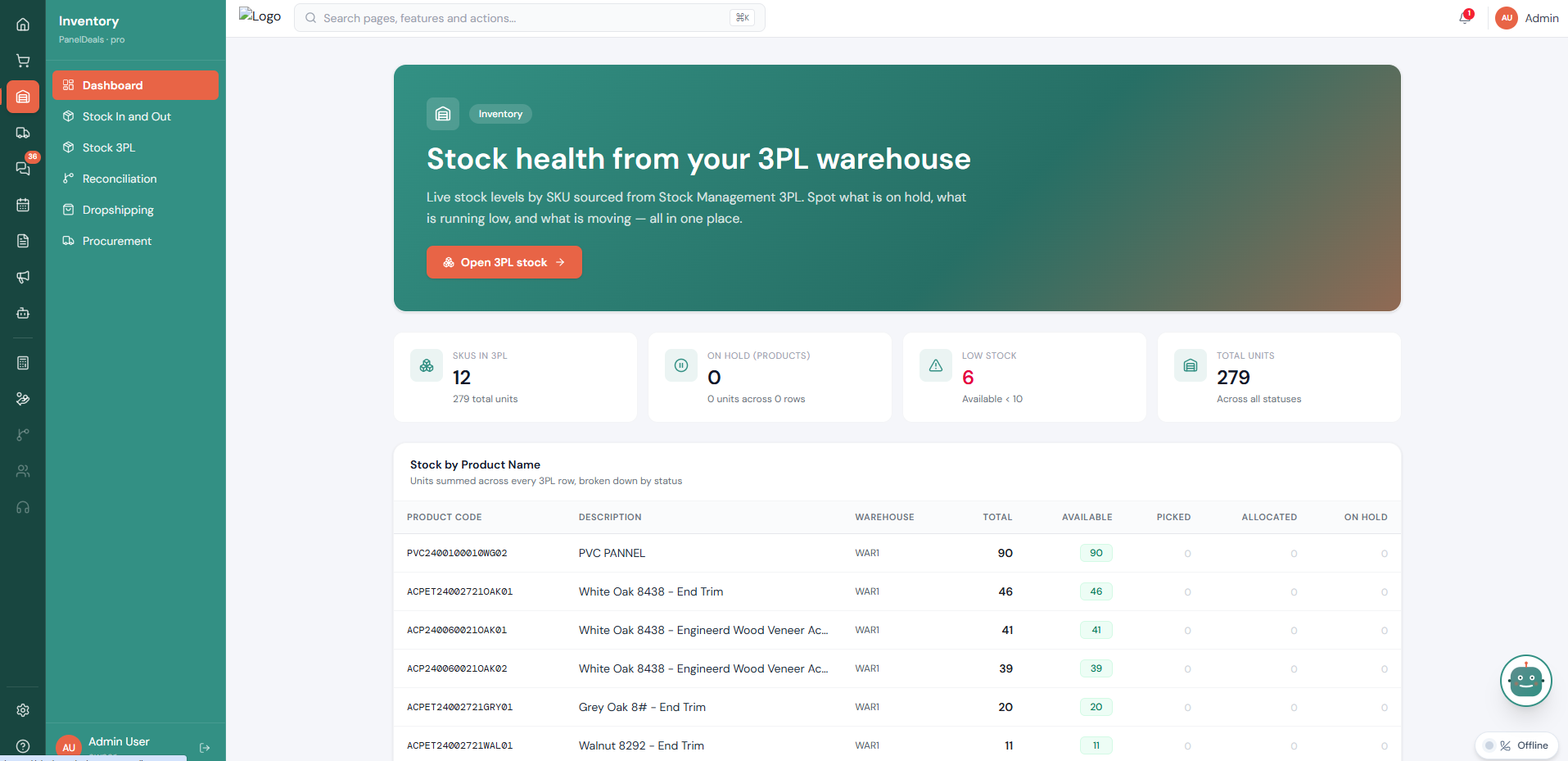
Inventory isn't a stock number. It's a chain of decisions.
A traditional system tells you 500 units are in stock. It may not tell you that 320 are already reserved, 60 are damaged, one warehouse is about to run out while another sits on excess, a supplier delivery is late, and a campaign next week will spike demand. CholaStock brings every supply and demand signal into one operating view — and its agents continuously understand what's available, what's committed, what's arriving and what should happen next.
Manage every unit from sourcing to customer order.
Watch CholaStock prevent a shortage before it happens.
One inventory risk. One accountable agent. No last-minute stockout.
Everything needed to manage supply, stock and sales demand.
Available = on-hand − reserved − blocked.
Inventory joined to sales, marketing, fulfilment and finance.
Let agents recommend, prepare or execute.
Apply different autonomy levels to different products, suppliers, warehouses and purchasing values.
Built for real supply operations.
Measure availability, efficiency and supply performance.
Put your inventory operation into one connected system.
Keep stock available without overbuying.
Give every product an AI inventory agent that knows what's available, what's committed, what's arriving and what needs to happen next.
Frequently asked questions
It connects supplier sourcing, procurement planning, purchase orders, inbound deliveries, warehouse storage, sales reservations, stock transfers, replenishment and reconciliation. Exact workflows depend on the integrations enabled for your organisation.
When a booking is confirmed, the required quantity is reserved against the relevant product and location and deducted from what remains available — helping prevent the same stock being committed to another customer.
The replenishment calculation considers confirmed bookings, forecast demand, available stock, open POs, safety stock and lead time — then adjusts for MOQ, pack size, budget and storage capacity.
POs can be prepared automatically when stock is projected below the required level. You control whether the agent only recommends, prepares for approval, or issues within approved limits.
Yes — on price, availability, lead time, MOQ, delivery history, payment terms and more. The recommended supplier comes with an explanation of why it was selected.
It tracks stock across locations and can identify whether an internal transfer would solve a shortage before recommending an external purchase.
Available quantity is calculated after deducting reserved or unavailable stock. When connected channels use the same position, a new reservation reduces what remains available everywhere.
The agent recalculates the future position, identifies affected bookings, and recommends a transfer, alternative supplier, split shipment, substitute product or revised promise date.
Inventory is separated by status, so damaged, quarantined or returned products are excluded from normal sales availability until a decision is made.
Yes — start with every recommendation and order reviewed by a person, then introduce limits later for established products, approved suppliers and routine order values.
The AI-native business operator. Your people set the direction; AI agents work alongside them to execute.
London, N1 7GU, UK
